
Looking for a quick reference to bring to your first game? Download the ICS Official Quick-Start Guide (PDF)! It is a print-ready one-page summary of the core rules, equipment, and key terms, ideal for bringing to your first game.
Equipment
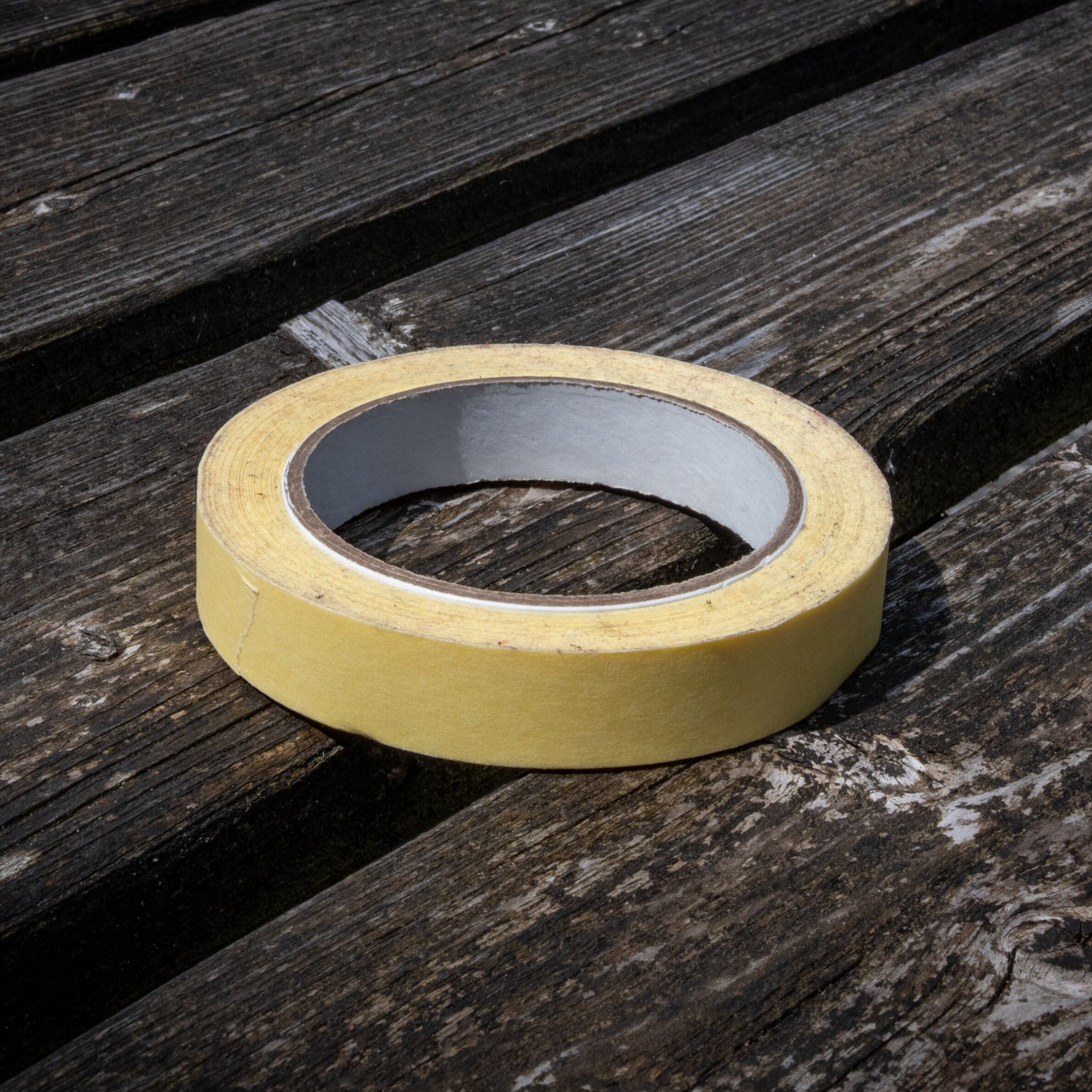
Quibble
Ring-shaped game object made of crepe tape.
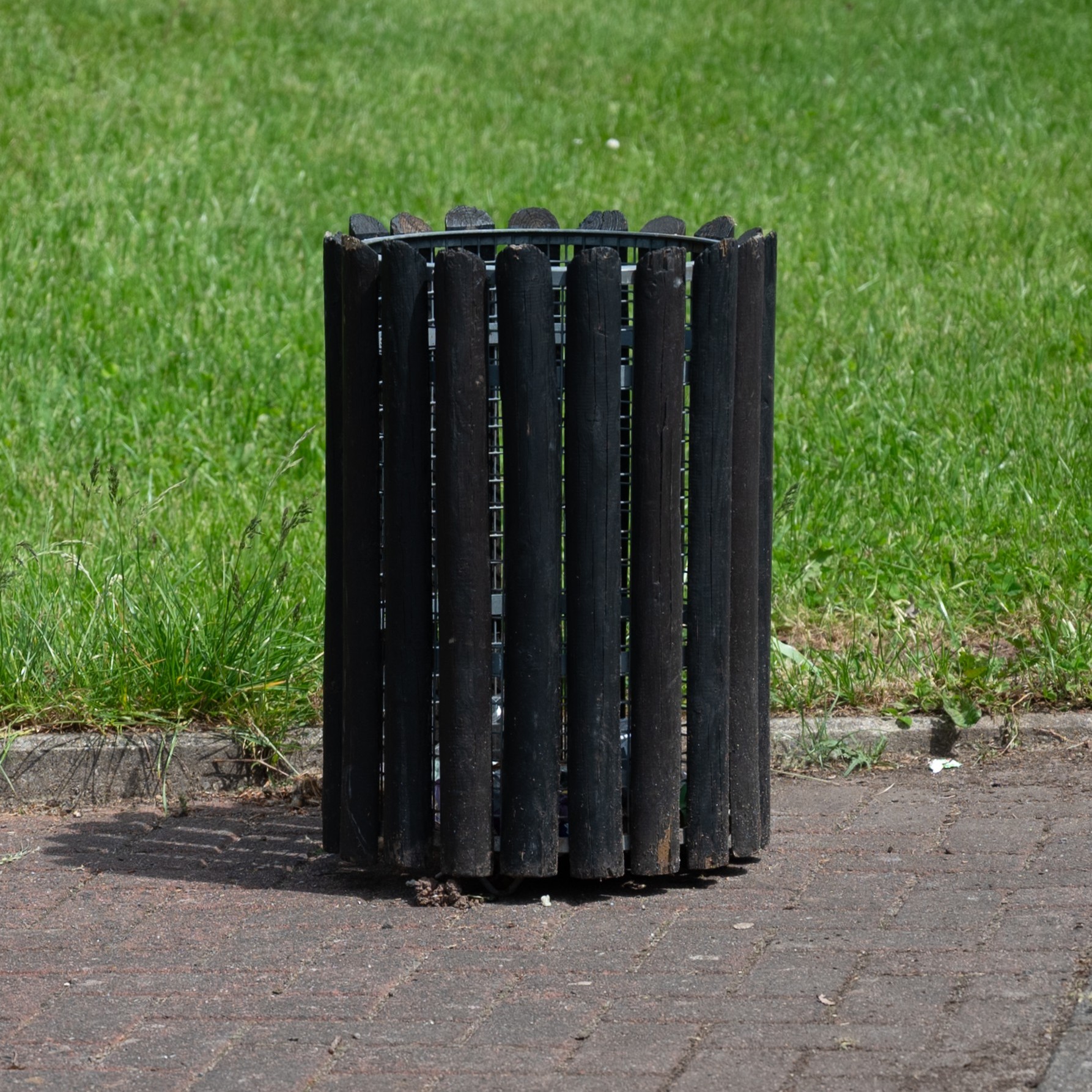
Quiver
Large container with opening at the top.
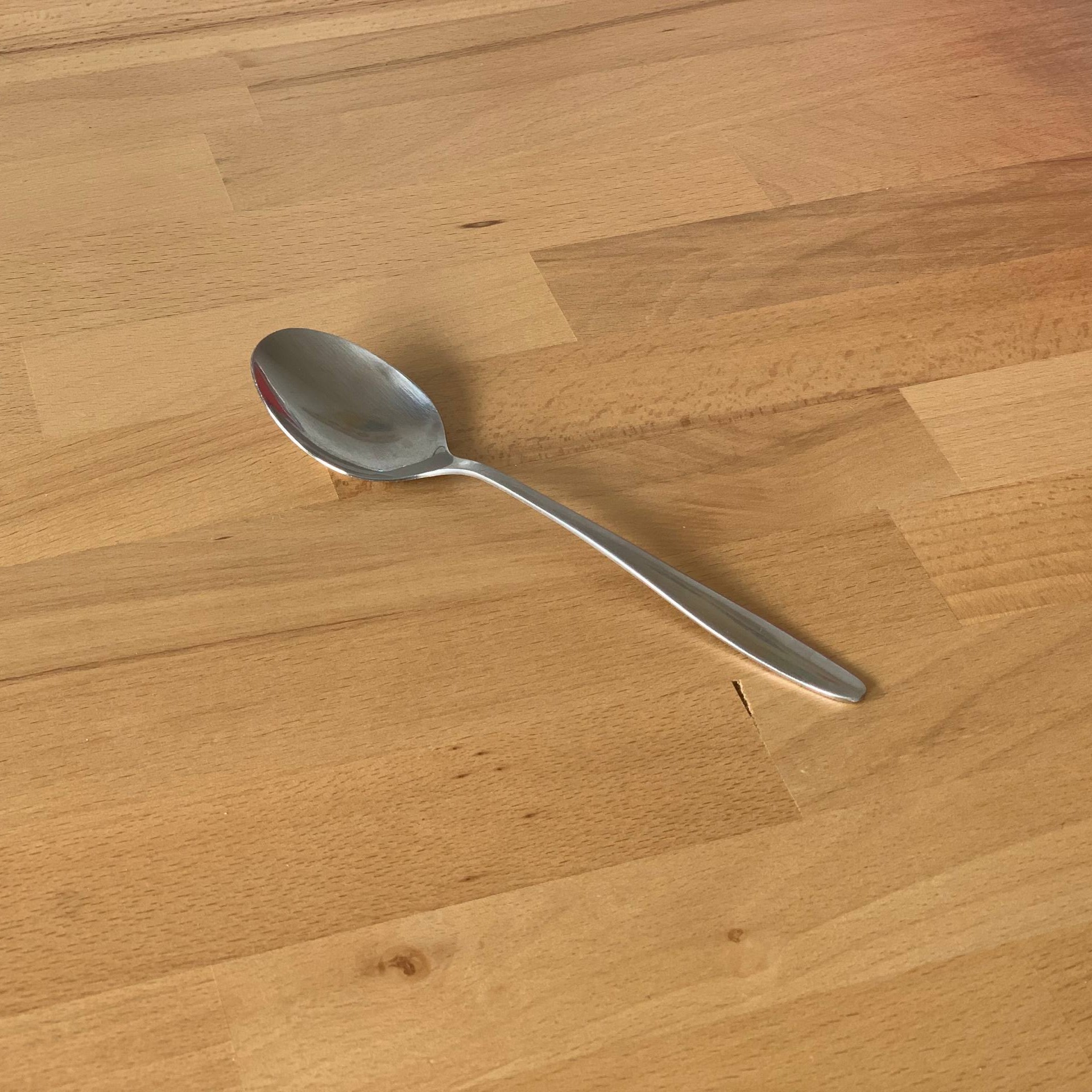
Somerset Spoon
Big spoon-shaped racket for standard shots.
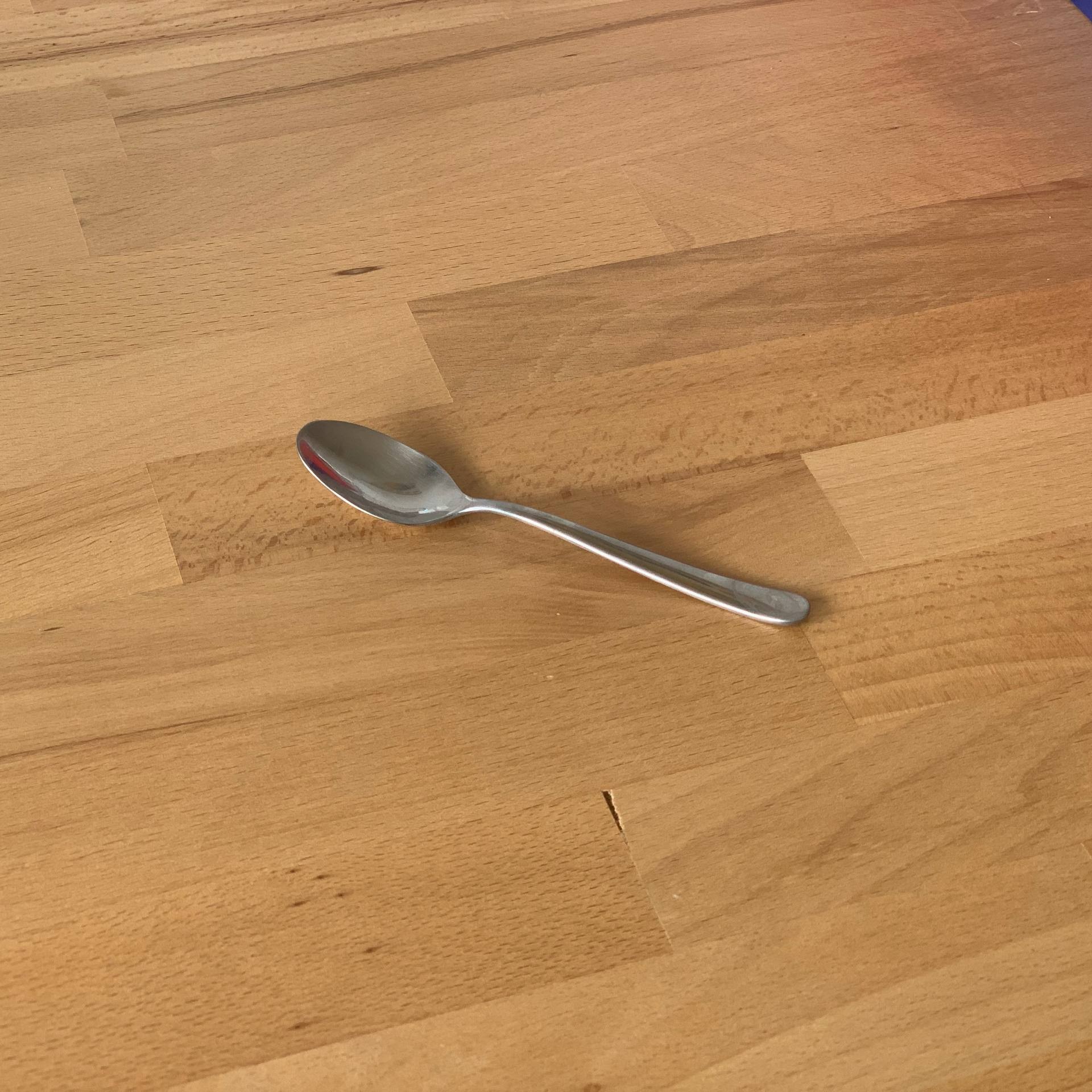
Baroness Shackleton Spoon
Small spoon-shaped racket for tight spaces.
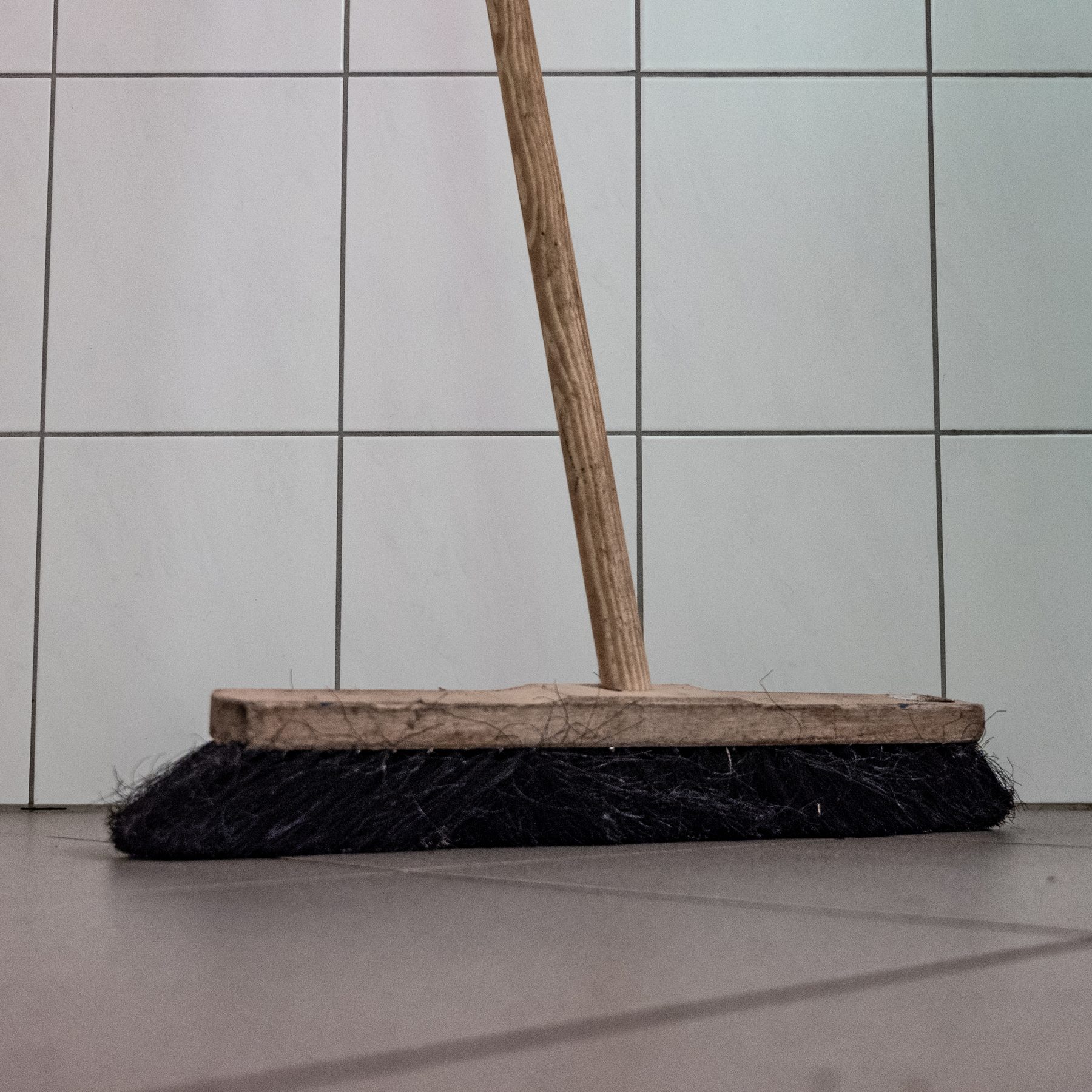
78-yard Bakewell Broom
Broom-shaped racket with organic, soft bristles.
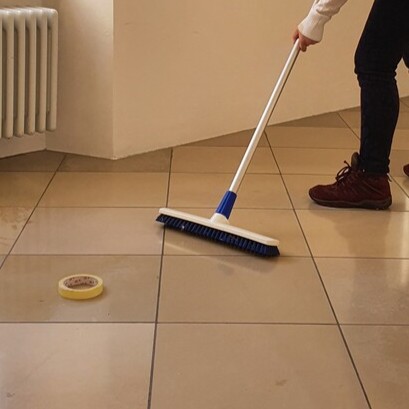
120-yard Bridgewater Broom
Broom-shaped racket with synthetic, stiff bristles.
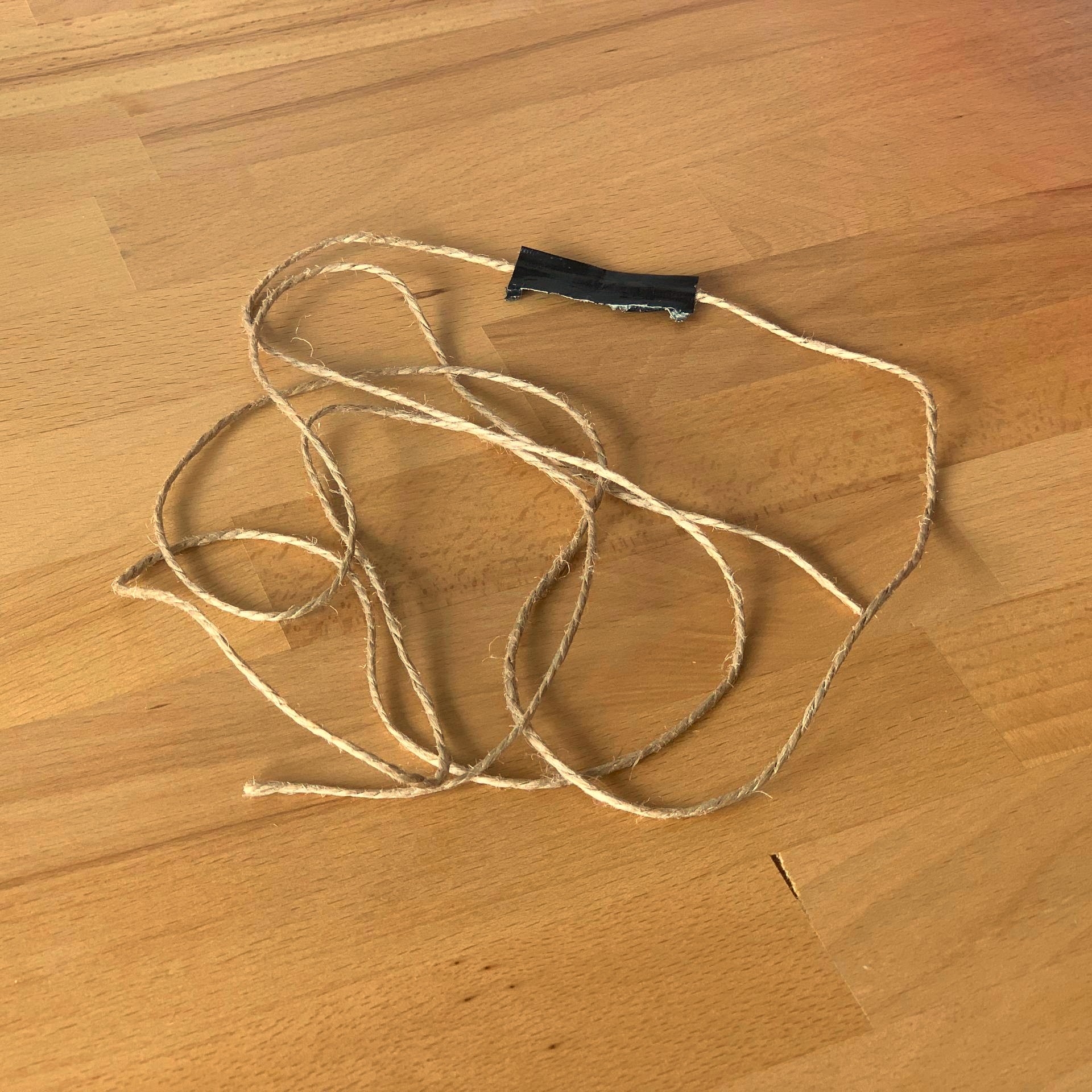
60-inch Slingshot
Parcel-string-like racket of 60 inch length with stripe in the center to hold a quibble.

Doorstep
Line defining the starting position.
"The first roll is always the hardest. But the thousandth roll reveals how much you still have to learn."
- Gaius Julius CaesarBasic Rules
- Objective: The Quibble (crepe tape roll) must be played into the Quiver (target vessel) in as few shots as possible. Players must follow the course and all route requirements as defined by the event organiser. After the first team has played into the Quiver, all other teams have to finish within 90 minutes.
- Doorstep: Prior to the first shot, the team may place the Quibble at any point behind the Doorstep (starting line). The team has to cross the Doorstep line with the first shot or repeat it. Following that, the next team may immediately begin. After the first team has crossed the Doorstep, all other teams have to start within 60 minutes.
- Shot: A shot is defined as any contact with the Quibble using the currently approved sporting implements: the Somerset Spoon, Baroness Shackleton Spoon, 120-yard Bridgewater Broom, 78-yard Bakewell Broom, and the 60-inch Slingshot. Any other physical contact with any Quibble after the shot is not permitted except for Revivals, Levels and Trims.
- Revival & Level: Prior to a spoon shot, the own Quibble may be moved by hand from a lying position to an upright position exactly once. The Quibble may be tipped but not be shifted or rotated. A Spoon shot must immediately follow. For Broom shots and Slingshots, the reverse procedure is allowed.
- Trim: Once per shot, the Quibble can be repositioned by hand if it is (a) in a position where every single racket is almost impossible to use regularly or (b) standing up or leaning against something such that broom and slingshot shots are not possible. In these cases, the players can move the Quibble horizontally by up to 5 cm into any direction, so that it can rest flat on the ground. A Revival afterwards is allowed.
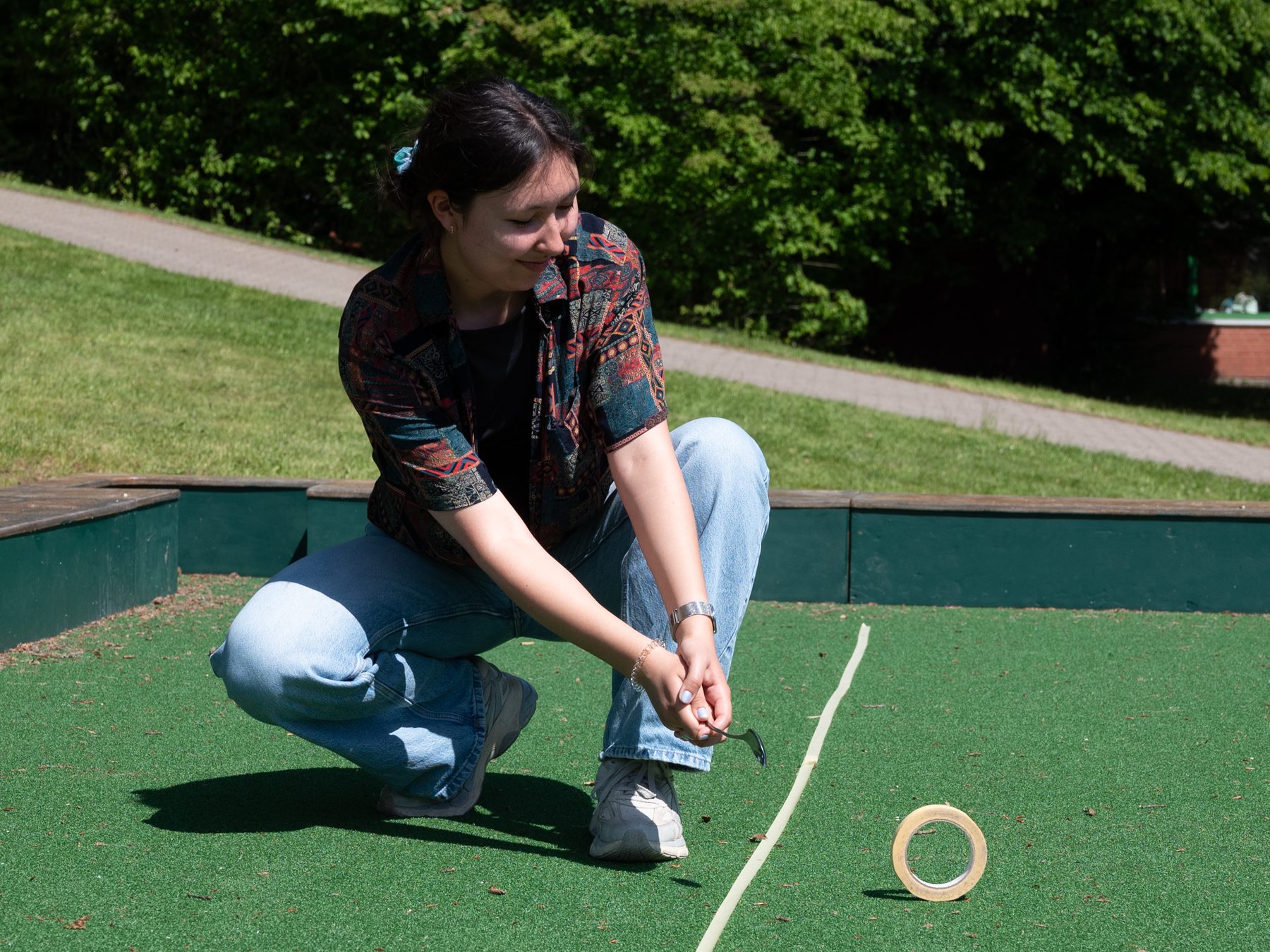
- Spoon Shot: The Quibble must be upright. One hand must grip the spoon's handle, the other hand must grip the first. Only the spoon's head may touch the Quibble but not remain in continuous contact with it.
- Broom Shot: The Broom may only be used in the designated zones marked by the event organiser. If no zones are marked, no brooms are allowed. The Quibble must be lying flat. The broom must not remain in continuous contact with the Quibble. During the shot, the Quibble must move away from the player.
- Slingshot Shot: The Quibble must be lying flat. Each player may hold only one end of the slingshot. The slingshot may touch the Quibble prior to the shot. The Quibble must leave the slingshot before coming to rest.
- Consorts: Play is conducted in consorts of two players. Shots may be taken by either player in any order, but no player may participate in more than two consecutive shots. Shared slingshot shots count as a shot for both participating players.
- Deadlock: If a Quibble is almost impossible to reach for the next shot, or it is highly unlikely that the players can get back to the course within 3 shots, the last shot may be repeated. The failed shot is counted twice. A deadlock has to agreed on by the referee or the next two adjacent teams.
Your First Game
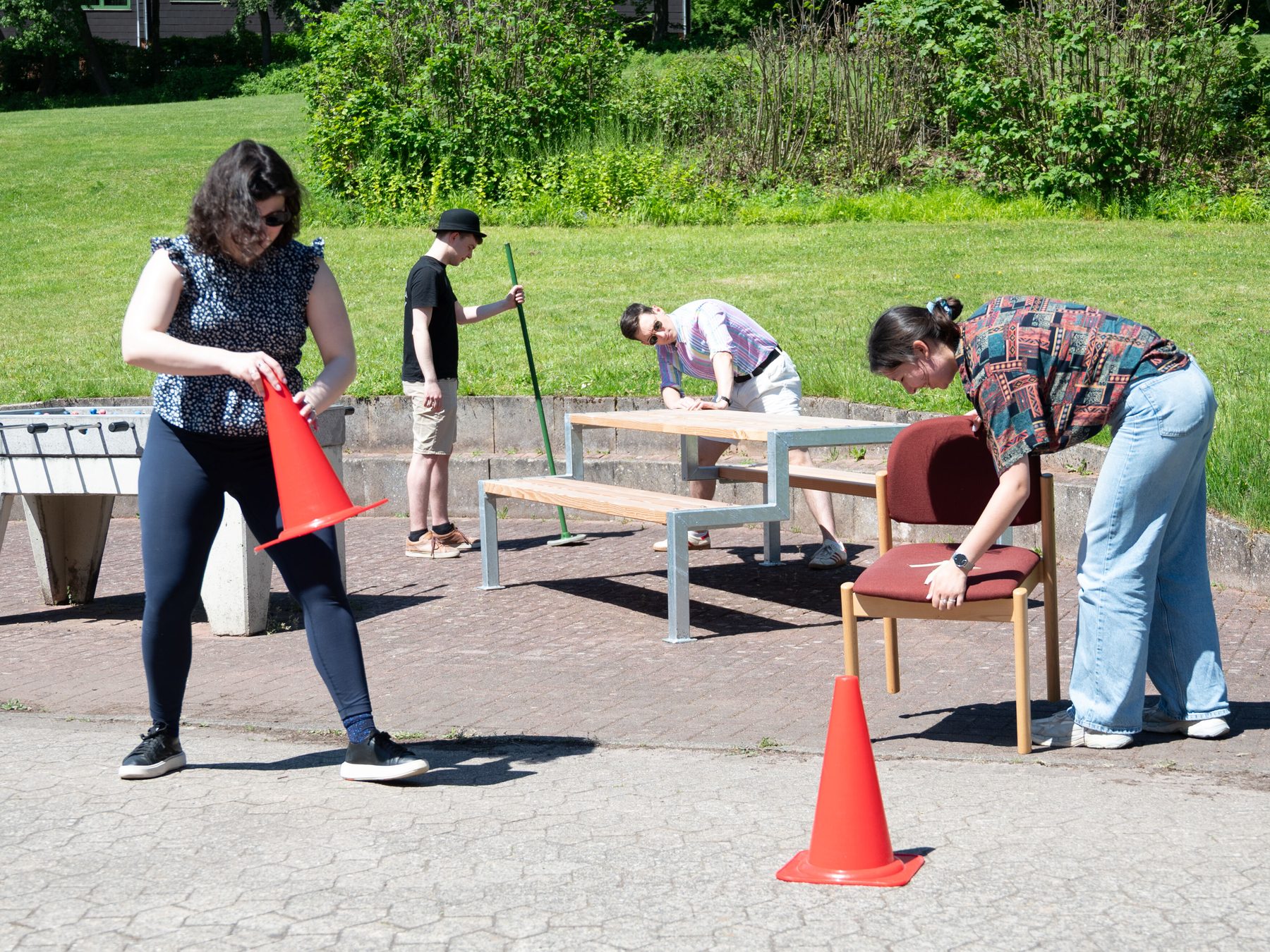
Step 1: Set Up a Simple Course
Since Brooms and Slingshots are only usable on flat ground, find a large building with smooth, level flooring and several corridors. Decide on a route rich in variety featuring elevation changes in both directions, different widths and types of pavements. Short outdoor sections for spoon shots can also add to the diversity. Ideally, the Quiver is placed in a central and busy area for an ideal climax. Backtrack from there, placing different kinds of obstacles with more elevation and direction changes as well as tight gaps. Keep it below 8 obstacles, organizers usually underestimate the amount of time the course takes. Finally, place or define the Doorstep. To add to the variety, define broom zones only for specific sections. Mark the broom zones as well as the route in general.
Step 2: Prepare Equipment
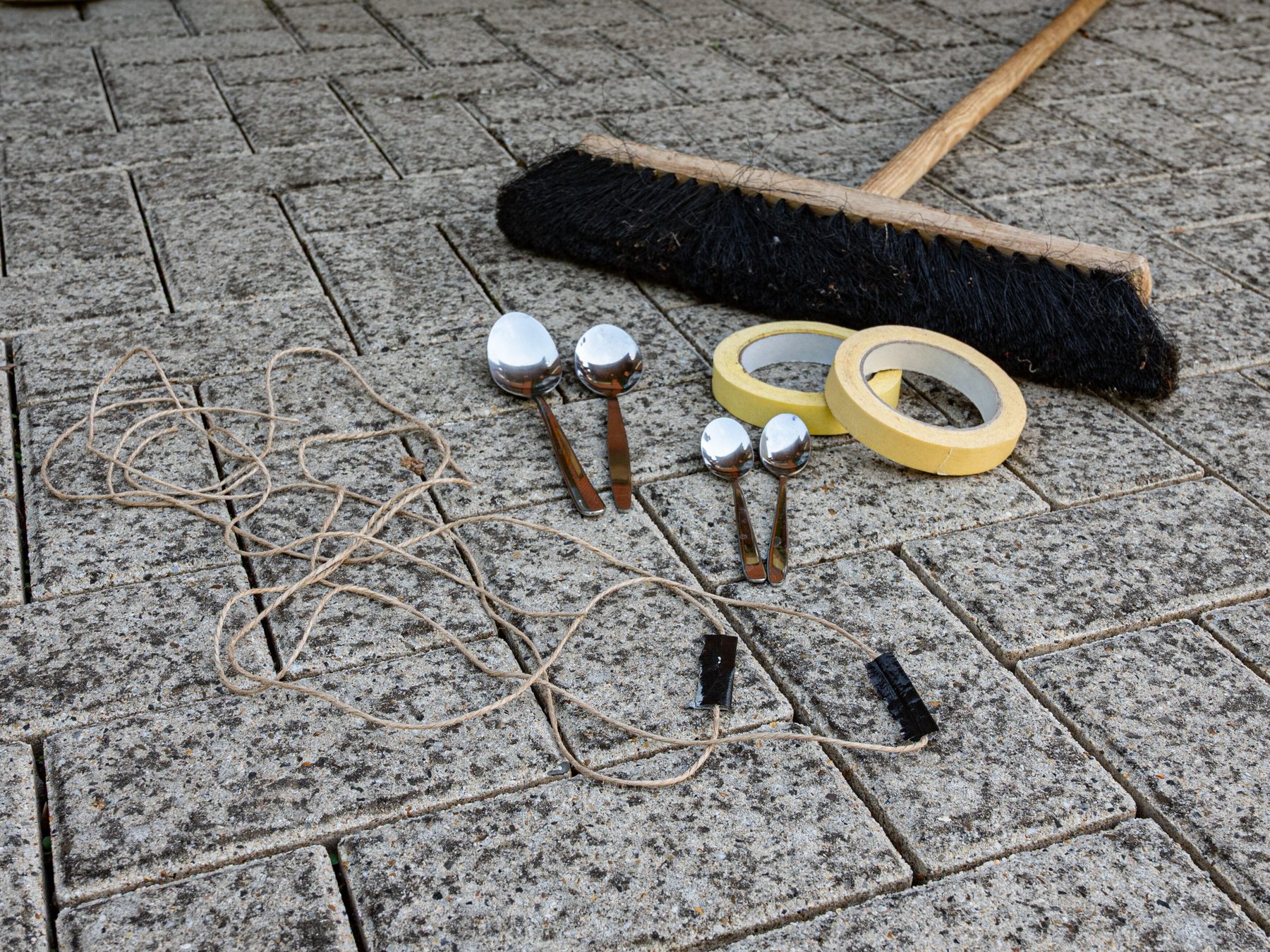
Get your hands on some Quibbles and rackets. For your first game, household spoons, brooms and crepe masking tape should suffice.
Step 3: Try the different shots
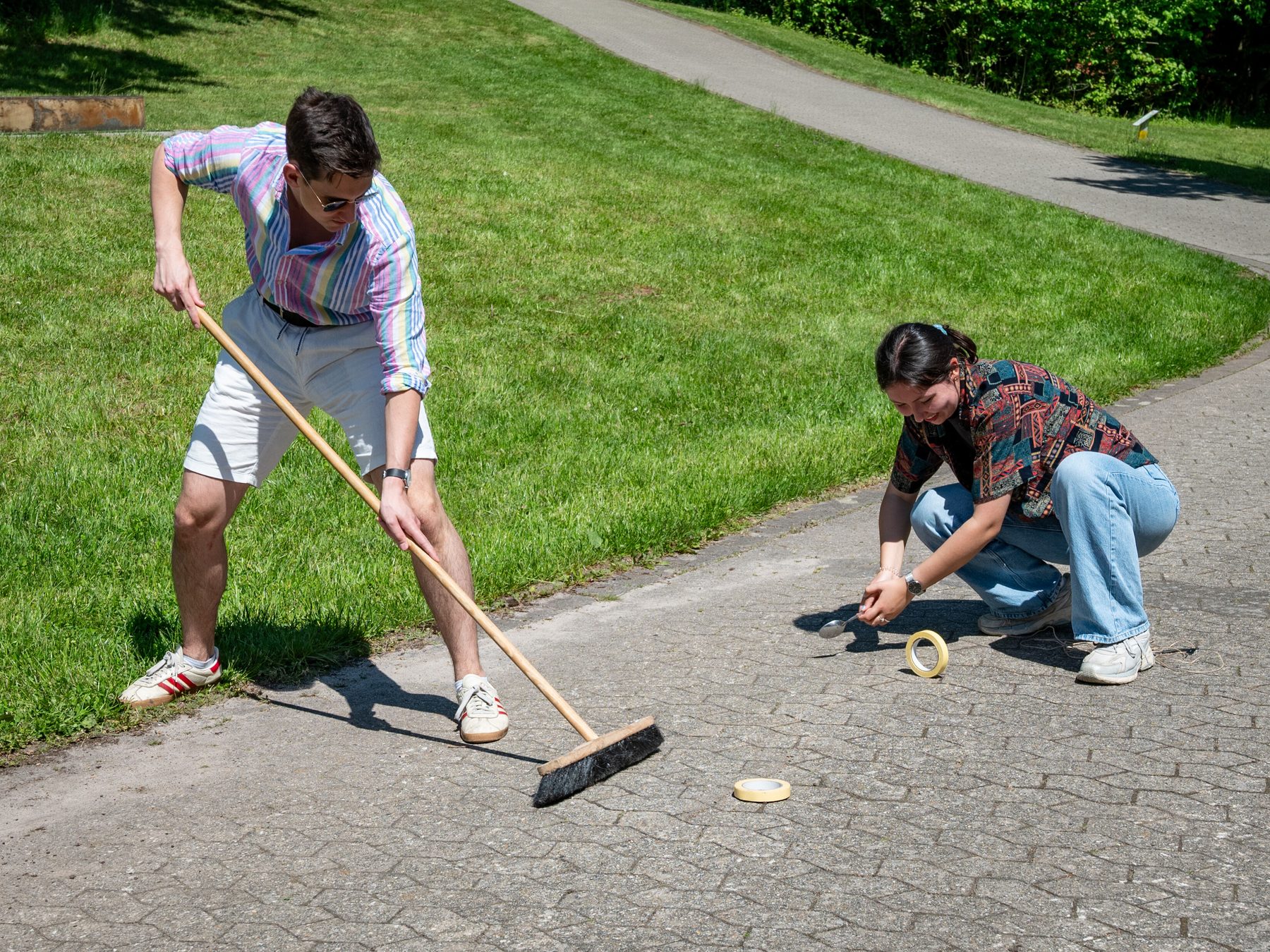
Before starting, we recommend getting used to the different racket and shot types. Play around until you can control the Quibble.
Step 4: Players Beware!
Find a second player and start your game! Shackle it!
Additional Clarifications
- Shackle: For a successful Shackle, the Quibble must come to rest within the Quiver.
- Jabberwacking: Quibble-on-Quibble contact is permitted.
- Pelting: If a Quibble gets in physical contact with a player of any team while the Quibble is moving during a shot, the shot must be repeated. If there is physical contact between shots, the Quibble must be moved to its last position. Active Pelting to get an advantage and repeated Pelting can result in disqualification. Teams must comply with another team's request to take their next shot without delay.
- Disqualification & Unfinished Game: Deliberately obstructing other teams or their shots, repeated or self-Pelting, or deliberately targeting other players may result in disqualification. For both disqualification or an otherwise unfinished game the team is awarded 1.5x the points of the last regular finisher (rounded up).
- Misusage of Rackets: There is no penalty for using a racket in a way that is not explicitly excluded in the rules.
- House Rule: The event organiser may define additional rules before the game begins if the venue or course makes it necessary, or if it meaningfully enhances the game. House Rules must be announced to all teams before the first shot. This option should be used sparingly, the official rules are designed to cover most situations.
- Final Say: If a situation is unclear, consult the referee. If no referee is present, the event organiser makes the final decision.